Spitfire & GT6 Forum
Differential rebuild advice
Posted by kaatmanduu




 |
Topic Creator (OP)
Sep 3, 2017 09:31 PM
Joined 10 years ago
230 Posts
|
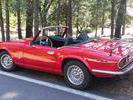
 This topic is about my

I have a spare differential out of a '78 that I'd like to refurbish and use to replace the leaky unit currently in the car. I've been doing some reading, and as long as I don't have to get into the carrier, I think it's something I can tackle.
Looking at the replacement, the pinion is hard to turn, especially now that the oil is completely drained. The pinion bearing feels rough, so I'll replace the seal and bearing there. It seems to be a crush type pinion, as it has a cap, I'll know for sure once I get that removed. The output shafts react almost immediately when the pinion is turned, so that seems positive.
The output shafts both turn freely, but do make a clicking sound when turned. I was planning on replacing the output bearings and seals. Will this fix the clicking, or is something else wrong?
Looking at the replacement, the pinion is hard to turn, especially now that the oil is completely drained. The pinion bearing feels rough, so I'll replace the seal and bearing there. It seems to be a crush type pinion, as it has a cap, I'll know for sure once I get that removed. The output shafts react almost immediately when the pinion is turned, so that seems positive.
The output shafts both turn freely, but do make a clicking sound when turned. I was planning on replacing the output bearings and seals. Will this fix the clicking, or is something else wrong?

spitfire50
Paul Mugford
|
Sep 4, 2017 05:57 AM
Top Contributor
 Joined 15 years ago
22,638 Posts
|
Mike,
You will have to remove the carrier to change the pinion bearing(s). That also will entail disturbing the crush sleeve, so it isn't trivial.
The "clicking" of the output shafts could be just the nature of the gears in the actual differential part of the assembly. The four differential gears are straight cut bevel gears and as each tooth makes contact there is a definite change in the force required to turn the gears.
That being said, changing the bearings on the output shafts isn't that bad a job and allows you to put new seals on the shafts too.
All the best,
Paul
TRF# 10423
You will have to remove the carrier to change the pinion bearing(s). That also will entail disturbing the crush sleeve, so it isn't trivial.
The "clicking" of the output shafts could be just the nature of the gears in the actual differential part of the assembly. The four differential gears are straight cut bevel gears and as each tooth makes contact there is a definite change in the force required to turn the gears.
That being said, changing the bearings on the output shafts isn't that bad a job and allows you to put new seals on the shafts too.
All the best,
Paul
TRF# 10423
|
Sep 4, 2017 08:49 AM
Top Contributor
Joined 14 years ago
20,983 Posts
|
|

Another thing to consider refurbishing:
The differential gears employ Thrust Washers between them and the carrier.
The Sun (side) gear TW are simple flats, but the planet gear TW are spherical in shape.
That allows the gearset to be rotated into position for assembly in the carrier with the cross shaft..
On later model Spitfires, TW are made of a fiber material rather than yellow metal.
Big surprise, the fiber ones wear quickly and disintegrate.
This leads to very loose gear engagement and slop.
https://www.rimmerbros.co.uk/Item--i-GRID005732
With the diff already apart, it's not hard to renew the TW.
A small pin holds the cross shaft in place, use a nail or broken drill bit to tap it out,
slide out the cross pin, and rotate the gearset within the carrier.
The hard part may be locating metal versions of the spherical TW needed, Rimmer lists them as NLA.
Regarding the stub axle bearings and seals, if they are not rough or leaking I would not bother messing with them.
It takes only 4 bolts to remove them, and that can be done without diff disassembly, and even with the diff in the car.
Likewise consider keeping current the carrier bearings.
The ring & pinion gears are adjusted into alignment for perfect gear mesh by shim packs placed between the bearing
outer race and the diff case bearing caps. Adjustments in the 0.001" range are significant.
New bearings are not guaranteed to position the carrier into the exact same position as the old ones, that's why shims
are used and adjustment is needed. If you have never set-up a ring & pinion gearset, it requires some tools and understanding.
It's worthwhile to at least try using the same shim packs, and then check ring & pinion gear mesh.
You will need to do that anyway when you change the pinion bearings.
I would at a minimum ensure that the shim packs be maintained in their exact same positions at disassembly.
The easiest way I have found is to insert a long piece of wire (a coathanger will to) through the center hole of the entire carrier
and twisting the ends together to form a loop. Do this before removing the bearing caps to free up the carrier.
Should the shim packs come loose, there is no way to distinguish them and put them back into the original sets.
Get a camera, take pictures step by step as you go. Bag and tag everything as it comes loose. Notes are helpful too.
The differential gears employ Thrust Washers between them and the carrier.
The Sun (side) gear TW are simple flats, but the planet gear TW are spherical in shape.
That allows the gearset to be rotated into position for assembly in the carrier with the cross shaft..
On later model Spitfires, TW are made of a fiber material rather than yellow metal.
Big surprise, the fiber ones wear quickly and disintegrate.
This leads to very loose gear engagement and slop.
https://www.rimmerbros.co.uk/Item--i-GRID005732
With the diff already apart, it's not hard to renew the TW.
A small pin holds the cross shaft in place, use a nail or broken drill bit to tap it out,
slide out the cross pin, and rotate the gearset within the carrier.
The hard part may be locating metal versions of the spherical TW needed, Rimmer lists them as NLA.
Regarding the stub axle bearings and seals, if they are not rough or leaking I would not bother messing with them.
It takes only 4 bolts to remove them, and that can be done without diff disassembly, and even with the diff in the car.
Likewise consider keeping current the carrier bearings.
The ring & pinion gears are adjusted into alignment for perfect gear mesh by shim packs placed between the bearing
outer race and the diff case bearing caps. Adjustments in the 0.001" range are significant.
New bearings are not guaranteed to position the carrier into the exact same position as the old ones, that's why shims
are used and adjustment is needed. If you have never set-up a ring & pinion gearset, it requires some tools and understanding.
It's worthwhile to at least try using the same shim packs, and then check ring & pinion gear mesh.
You will need to do that anyway when you change the pinion bearings.
I would at a minimum ensure that the shim packs be maintained in their exact same positions at disassembly.
The easiest way I have found is to insert a long piece of wire (a coathanger will to) through the center hole of the entire carrier
and twisting the ends together to form a loop. Do this before removing the bearing caps to free up the carrier.
Should the shim packs come loose, there is no way to distinguish them and put them back into the original sets.
Get a camera, take pictures step by step as you go. Bag and tag everything as it comes loose. Notes are helpful too.

Tonyfixit
Tony M
|
Sep 4, 2017 10:43 AM
Top Contributor
Joined 10 years ago
22,234 Posts
|


colodad
Calvin Williams
|
Sep 4, 2017 11:58 AM
Joined 12 years ago
2,008 Posts
|
|
Sep 4, 2017 11:59 AM
Top Contributor
Joined 14 years ago
20,983 Posts
|
|
In reply to # 1482762 by Tonyfixit
It is not too difficult to make the planetary TW's from suitable material or flat TW's 'cup' them.
The last time I bought TW's they were only available in one size, and I spent ages filing them down.
The last time I bought TW's they were only available in one size, and I spent ages filing them down.
It's worth noting that while the spherical TW were originally offered in various thickness, a workable
repair can be still be executed by using whatever thickness you are able obtain.
This is because spherical TW thickness can be compensated with changes to the flat TW thickness.
The Sun and Planet gears mesh at a fixed bevel angle, so the degree of mesh can be set by just the Sun gears.
While it's true that the result may not achieve a 100% perfect full tooth engagement, it is still far, far, FAR
superior to the tooth mesh and engagement that results from having no Planet gear TW at all.
|
Sep 4, 2017 12:36 PM
Joined 12 years ago
21 Posts
|
|
Great advise! Nothing more exciting that having a Triumph differential EXPLODE at 65 MPH on the freeway, yes, it happened to me leaving me stranded on the side of the road with a fist sized chunk missing from the case of my 67 GT-6! Unlike your Chevy truck, Triumph differentials are NOT usually available from your local auto wrecking yard! Always keep a "few" spares on hand!
|
Sep 4, 2017 03:06 PM
Top Contributor
Joined 14 years ago
20,983 Posts
|
|
In reply to # 1482786 by 67GT-6
Great advise! Nothing more exciting that having a Triumph differential EXPLODE at 65 MPH on the freeway, yes, it happened to me leaving me stranded on the side of the road with a fist sized chunk missing from the case of my 67 GT-6! Unlike your Chevy truck, Triumph differentials are NOT usually available from your local auto wrecking yard! Always keep a "few" spares on hand!
Was it a 3.27 ratio?
I've heard that the carrier for the 3.27 is not as strong, and do break in GT6 service where there is more torque from the 2.0 L.
|
grumpicus
Steve Jackson
|
Sep 4, 2017 03:38 PM
Joined 13 years ago
2,169 Posts
|

The later 1500 differentials (from diff FH106101 onwards) used a better diff carrier assembly than the earlier Mk4 & 1500 ones - they also used different carrier bearings, stronger sun & planet gears (with fewer and larger teeth). These parts were common with the later TR7 4 speed cars, and were introduced because of problems with TR7s shedding diffs - just like the gearbox mods when the TR7s were stripping reverse gears. I reckon the later diff carriers (RKC1983) date from around 1977 or 1978, so strip down any later diff before ordering new parts!
The 3.27:1 diffs did have a reputation for failure on the GT6 - it was something to do with the diff carrier and 3.27:1 crownwheel combination. The GT6 diff carrier was the same as the one fitted to the Spit Mk4 and Spit 1500 up to about 1977 or 1978 (21H5478) - for the life of me I can't remember what the exact problem was, although I suspect it was due to the mounting of the crownwheel, and/or the lack or space in the diff case. It does appear that the carrier for the 3.27:1 crownwheel had a different part number (307642), so maybe the 21H5478 carrier had to be machined down to take that crownwheel. (Do an extended search on this forum, I'm sure it's been covered a few years back.) The later Spit 1500s sold to Switzerland with a 3.27:1 diff used a modified RKC1983 carrier, and different crownwheel retaining bolts to avoid the heads catching on the inside of the casing. That carrier had the part number RKC2802, but it was in reality just an RKC1983 carrier machined down to take the 3.27:1 crownwheel.
As far as rebuilding any diff is concerned, the flat fibre thrust washers are a complete waste of time, so always replace them with copper versions - they were available in the UK from Canley Clasiics or Rimmers a couple of years ago. (Fibre thrust washers were apparently introduced to make initial assembly easier - Triumph must have calculated they would only start to wear out or split once the car was out of warranty....) The planet gear spherical thrust washers are harder to come by, but I managed to get some which are just about the right thickness from Revington TR in the UK - apparently one of the TR models (maybe the TR6?) uses the same size thrust washers in its diff.
Edited 2 time(s). Last edit at 2017-09-04 03:58 PM by grumpicus.
The 3.27:1 diffs did have a reputation for failure on the GT6 - it was something to do with the diff carrier and 3.27:1 crownwheel combination. The GT6 diff carrier was the same as the one fitted to the Spit Mk4 and Spit 1500 up to about 1977 or 1978 (21H5478) - for the life of me I can't remember what the exact problem was, although I suspect it was due to the mounting of the crownwheel, and/or the lack or space in the diff case. It does appear that the carrier for the 3.27:1 crownwheel had a different part number (307642), so maybe the 21H5478 carrier had to be machined down to take that crownwheel. (Do an extended search on this forum, I'm sure it's been covered a few years back.) The later Spit 1500s sold to Switzerland with a 3.27:1 diff used a modified RKC1983 carrier, and different crownwheel retaining bolts to avoid the heads catching on the inside of the casing. That carrier had the part number RKC2802, but it was in reality just an RKC1983 carrier machined down to take the 3.27:1 crownwheel.
As far as rebuilding any diff is concerned, the flat fibre thrust washers are a complete waste of time, so always replace them with copper versions - they were available in the UK from Canley Clasiics or Rimmers a couple of years ago. (Fibre thrust washers were apparently introduced to make initial assembly easier - Triumph must have calculated they would only start to wear out or split once the car was out of warranty....) The planet gear spherical thrust washers are harder to come by, but I managed to get some which are just about the right thickness from Revington TR in the UK - apparently one of the TR models (maybe the TR6?) uses the same size thrust washers in its diff.
Edited 2 time(s). Last edit at 2017-09-04 03:58 PM by grumpicus.
|
Sep 4, 2017 04:18 PM
Joined 12 years ago
21 Posts
|
|
Thanks for the info, in the meantime I still have 3 differentials unopened for spares. In my original factory manual, which I received with my 1967 GT-6, they state that a Churchill spreader MUST be used for servicing or rebuilding the differentials, since I never tried rebuilding one, but have just replaced the front seals, I never needed one, though someday that day might be coming up! For my Spitfires, I do have a NEW ring gear and pinion set put away somewhere, but can't remember the gear ratio. Yes, TOO MANY TRIUMPHS, too many parts, and getting TOO old!
|
grumpicus
Steve Jackson
|
Sep 4, 2017 04:42 PM
Joined 13 years ago
2,169 Posts
|
In reply to # 1482819 by 67GT-6
Thanks for the info, in the meantime I still have 3 differentials unopened for spares. In my original factory manual, which I received with my 1967 GT-6, they state that a Churchill spreader MUST be used for servicing or rebuilding the differentials, since I never tried rebuilding one, but have just replaced the front seals, I never needed one, though someday that day might be coming up! For my Spitfires, I do have a NEW ring gear and pinion set put away somewhere, but can't remember the gear ratio. Yes, TOO MANY TRIUMPHS, too many parts, and getting TOO old!
Yes, the spreader is listed as an essential tool, the idea is that it stretches the outer casing, allowing the diff carrier and its bearings to drop out for complete dismantling. In reality, the bearings will have worn enough for the assembly to drop out without the tool. For rebuilding, the idea is that because a preload is required on the taper roller bearings, the whole new assembly is offered up to the casing, with the spreader holding the main casing slightly stretched to allow the assembly to drop into place. Remove the spreader, and the correct preload is applied by the casing regaining its normal shape, and squeezing the bearings and carrier.
I managed to rebuild a diff a few years ago without the spreader - I figured out that if I could get the crownwheel and pinion to mesh correctly, and shim the bearings to give zero endfloat without any spreader, I could then remove the carrier assembly and its bearings plus shims, and heat up the main casing (with pinion group installed) to around 100 degrees C. The expansion of the metal casing would allow me to drop the (cold) carrier assembly, bearings and shims into place, and would allow then allow me to insert an extra couple of very thin shim washers - before all parts reached the same temperature. These extra shims would give the correct preload once it had all cooled down. Surprisingly, it all worked, and I ended up with a diff which ran a lot quieter!
I also understand about having too many parts lying around, not enough time - oh, and the getting old bit, too.....

|
Sep 4, 2017 04:51 PM
Top Contributor
Joined 14 years ago
20,983 Posts
|
|
In reply to # 1482819 by 67GT-6
Thanks for the info, in the meantime I still have 3 differentials unopened for spares. In my original factory manual, which I received with my 1967 GT-6, they state that a Churchill spreader MUST be used for servicing or rebuilding the differentials, since I never tried rebuilding one, but have just replaced the front seals, I never needed one, though someday that day might be coming up! For my Spitfires, I do have a NEW ring gear and pinion set put away somewhere, but can't remember the gear ratio. Yes, TOO MANY TRIUMPHS, too many parts, and getting TOO old!
I've rebuilt many diffs, and never had a Churchill spreader.
When I started racing Spitfires in 1968, I asked my fellow racers, and none of them had one either.
In fact I have never seen one, and never met or talked to anyone that had one.
What you can do is use a fine sharp file, and put a slight bevel in the machined edge at the parting line.
At assembly time, chill the carrier assembly in the freezer, and warm the case in the oven to around 150 F.
Carefully 'offer up' the carrier assembly to the case, use a few taps with a brass hammer to seat the bearing races
and shim pack fully into the bearing saddles.
PS it's helpful to arrange the shim pack ordered with the thickest shims towards the outside ends, thin shims have a tendency to jam and kink rather than slide in place.
Edited 1 time(s). Last edit at 2017-09-04 05:43 PM by clshore.
|
Tonyfixit
Tony M
|
Sep 4, 2017 05:50 PM
Top Contributor
Joined 10 years ago
22,234 Posts
|
I made a simple steel frame with a small scissor jack, to ease the case just enough to make it easy to pry the carrier out, and use about the same expansion to put it back in again.
Considering I may have to do this 6 or more time in setting up a diff, I found it worthwhile .
Considering I may have to do this 6 or more time in setting up a diff, I found it worthwhile .
Attachments:
IMG_20170904_154314.jpg 102.1 KB

|
Sep 4, 2017 06:05 PM
Joined 12 years ago
21 Posts
|
|
I've always wondered WHY the Brits didn't just make the case opening just a "little" larger so that the carrier can just be "dropped" in like on American and Japanese differentials? At the present time am in the process of putting in a new "pumpkin" in my 1998 4-Runner which "mysteriously" locked up after only 210,000 miles on it. I have another Toyota which has over 400,000 on it's rear end, it's getting noisy, but still runs!
Having trouble posting or changing forum settings?
Read the Forum Help (FAQ) or click Contact Support at the bottom of the page.